Rebuilding my portfolio with Next.js and Keystatic
July 16, 2026
This site had been running for over a year with little change. The hero showed a 5 MB 3D laptop, pages rendered no server-side HTML at all, and publishing the smallest project meant editing two JSON files and pushing a commit. Here is what changed, and why.
The diagnosis
The starting point was an honest audit: architecture, design, SEO. The biggest problem was not visual.
The invisible SSR bug
Every page was a client component, and the theme provider rendered a spinner until the dark/light preference was read from localStorage. As a result, the HTML served to search engines contained nothing at all. The fix took a few lines (render dark mode by default on the server, reconcile after hydration), but it had to be found first.
The new visual system
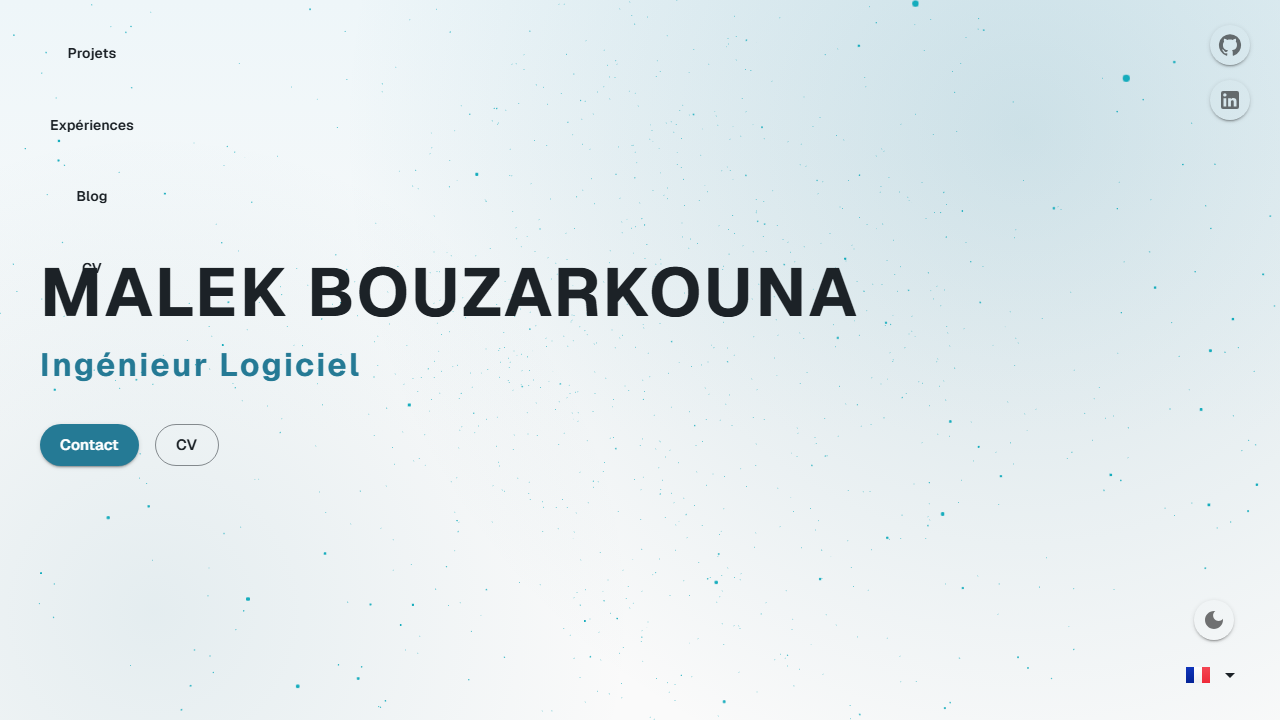
The redesign replaced accumulation with a system: an off-black/off-white palette with a single cyan accent inherited from the old identity, the Geist typeface for text and its mono variant for dates and tags, one border radius for cards and pill-shaped buttons.
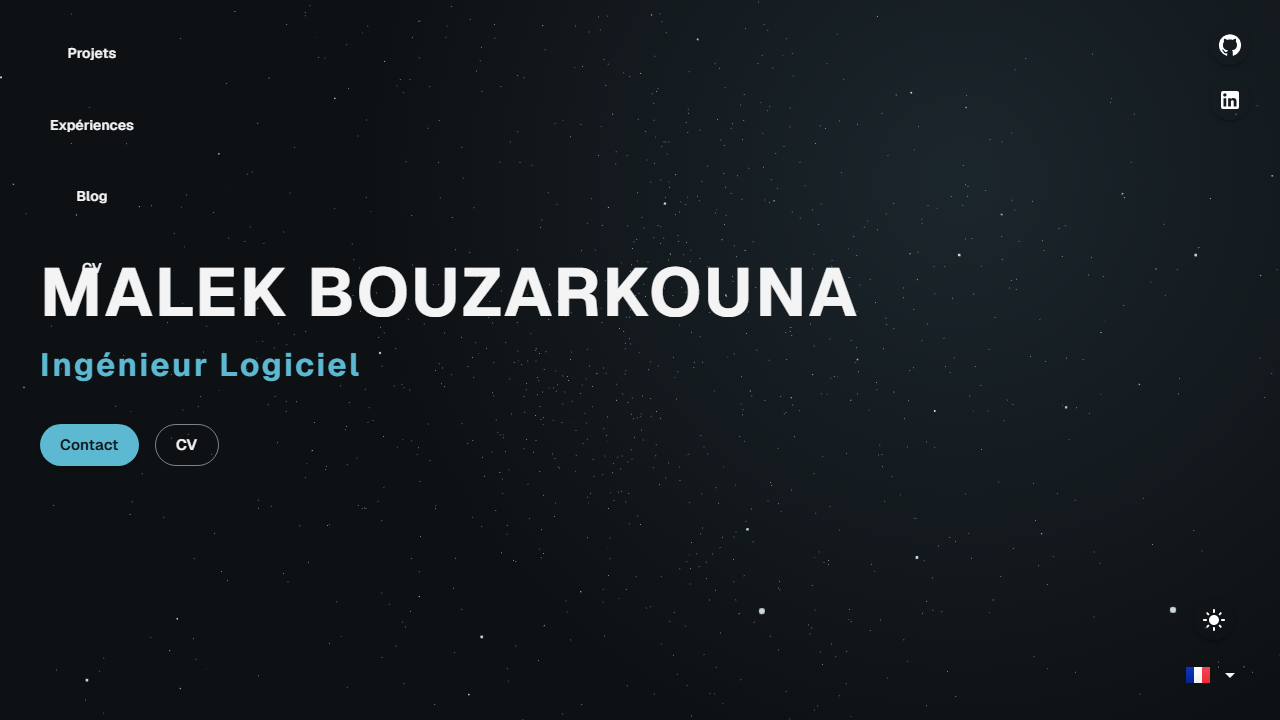
The 3D laptop and the background video were removed in favor of a purely typographic hero over the starfield. Nine megabytes of assets left with them. Light mode received its own variant, with stars recalibrated to stay visible on a pale background.
Content out of the code
The most structural part is invisible: featured projects and the posts on this blog are files in a content/ folder, edited through a Keystatic admin at /keystatic. In production, every publication becomes an automatic GitHub commit, and Vercel redeploys. Writing this article required neither a code editor nor a command line.
Cross-listing without duplication
A project can appear on the blog with a checkbox, and a post can show up in the featured grid the same way. Everything is written once, and its card always points to its canonical page.
Inline video embed demo (replace with your own).